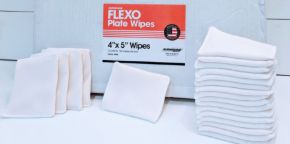
Burnishine is well known for its excellent offset chemicals. What you may not know is we also make an awesome Flexo Cleaner for cleaning UV and water-based inks and varnishes.
We formulated our Flexo Cleaner to be effective, yet safe for the printer, plates, rollers and the environment.
Testing was done in conjunction with a leading press manufacturer, and the esteemed Fox Valley Technical College. This means you can be assured our cleaner meets the high standards established by these institutions. We can honestly say our cleaner outperformed other popular cleaners!
Most flexo cleaners for water-based and UV ink do a good job cleaning plates and anilox rolls and are relatively safe for the environment. But some cleaners continue to use a chemical called nonyl phenol ethoxylate, which is highly toxic to aquatic life. Companies using this chemical will have to reformulate as it’s in the process of being phased out Just think, every time it’s used, it goes down the drain and contaminates local water systems. We are proud to say our cleaner does not contain nonyl phenol ethoxylate!
Here’s the low-down on the features and benefits of using Burnishine Flexo Cleaner:
We wanted to make it as easy as possible to test our cleaner, which is why we decided to add quarts to our packaging. With a minimal investment you can see for yourself why you should be using Burnishine Flexo Cleaner.
Click on this link to take you to our Flexo Cleaner product page. https://www.burnishine.com/flexo-cleaner-parent
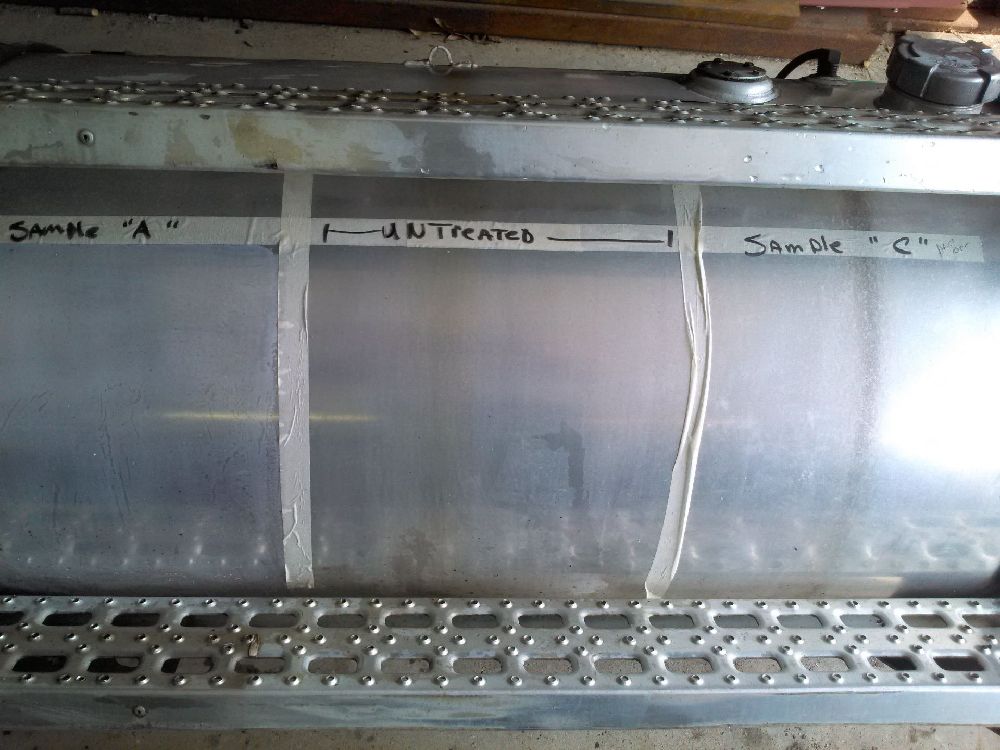
You may have noticed a new product called Aluminum Brightener on our website’s specialty product page. You may even wonder how Aluminum Brightener fits in with our traditional pressroom product line, and why we decided to carry it.
Quick bit of history here. Burnishine’s previous owners discontinued Aluminum Brightener after selling it for years in big box retailers. Since then we have received numerous inquiries and requests for our aluminum cleaner to be brought back. After doing some digging and research, we found that our Aluminum Brightener was actually a really good product, and worked extremely well at cleaning aluminum. After creating a few test batches of the aluminum cleaner that we call Aluminum Brightener we confirmed how well the product works at cleaning aluminum surfaces, and decided to bring it back! Needless to say, fans are thrilled they can once again buy it.
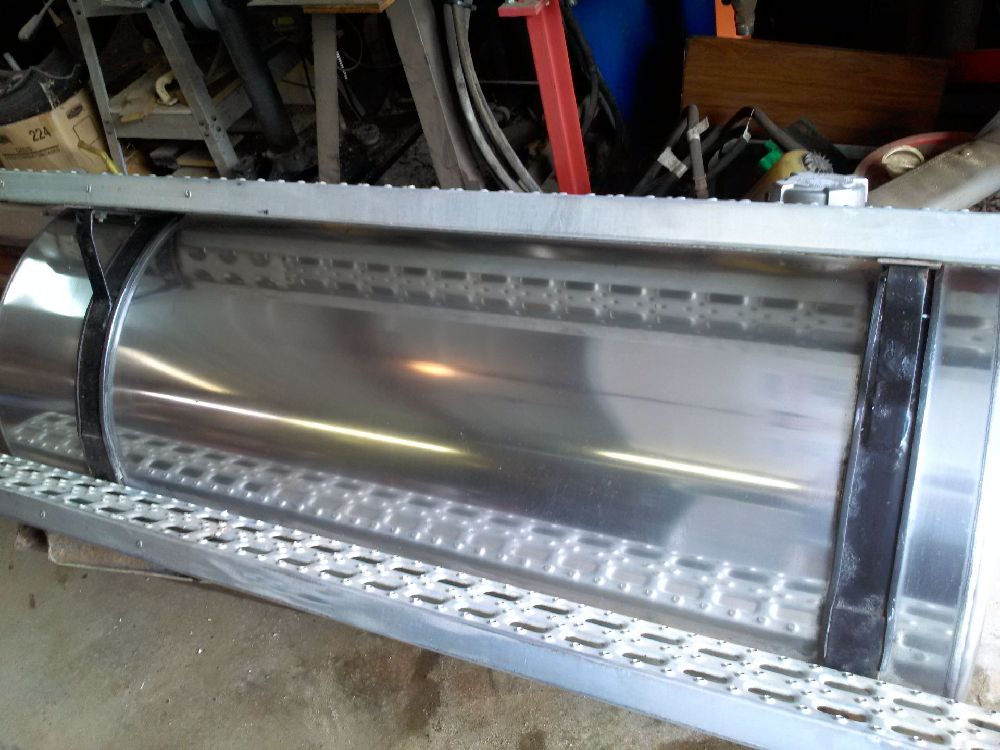
Since bringing back Aluminum Brightener we've received some great feedback from returning and new customers alike, and are finding Aluminum Brightener has many uses. It's great for cleaning and brightening aluminum on:
Aluminum Brightener is an industrial strength aluminum cleaner and brightener. It quickly and easily removes carbon, grease, oil, road film, stains and diesel smoke so your aluminum looks like new. It’s simple to use. Just apply and rinse with water.
Did we mention it’s safer to use than products containing hydrofluoric acid? And it’s biodegradable.
The only thing we don't recommend it for is cleaning highly polished chrome.
Aluminum Brightener is packaged in a ready-to-use, convenient spray bottle. No muss. No fuss. That being said, we are open to making Aluminum Brightener in gallons, 5-gallon containers, 55 gallon drums, and even totes if a customer needs it. We’re pretty flexible – just ask! We even have a place to add your thoughts on our website. You talk, we listen.
Previously we touched on how fountain solutions help maintain pH and conductivity during press runs. Some printers are knowledgeable about both these values. However, many printers are only familiar with pH, but don’t measure or understand conductivity.
Quick chemistry lesson here. pH is simply the amount of acid present in the fountain solution. Acid helps the ink stick to the image area and keeps the non-image clean. Conductivity is the measure of electrical flow through the fountain solution.
Pure water does not conduct electricity well, so as impurities from ink, paper, spray powder, and paper coating increase, so does conductivity. The higher the conductivity, the more problems you are likely to experience. If you use tap water instead of RO or distilled, you are adding a lot of minerals and other impurities that will increase conductivity and shorten the life of your fountain solution. That’s why it’s so important to start with RO or distilled water, and to measure both pH and conductivity.
Let’s start with a simple scenario. Your press is running fine for the first 2-3,000 impressions or so, but then you notice the ink isn’t as dense as when you first started. You increase the amount of ink, and for a while the image seems fine. Then things go downhill again. Ink starts piling, and you’re getting a little picture framing.
To fix the piling, you increase the amount of fountain solution, but then the ink density becomes too light again. You measure pH, but it’s within range, so what could be causing the problem?
The most likely culprit – conductivity! At the point the ink starts breaking down, conductivity has become so high that it affects the ability of the solution to do its job. Now you must clean up the press, remix and replace the fountain solution. This is not fun or productive. You waste time, paper stock, ink, and sometimes your sanity!
It’s relatively easy to measure both pH and conductivity. There are a lot of good meters on the market.
Measuring conductivity is a little more involved, but it’s not difficult. Take measurements of the water before and after mixing your solution. Write this number down as it is your starting point. Some solutions might have a reading of 1000-1200, but some may be as low as 600 depending on the type of surfactants, the addition of alcohol or alcohol replacements. This is not a big deal. It’s your “norm”.
Measure conductivity every hour or so and record the numbers. Problems most likely will start when conductivity gets to be 500 -1000 points higher than where you started. (300-400 if your solution starts out in the lower 600 range.) Each press is different, so measure each one. Once you notice conductivity is creeping up too high, replace the old solution.
Burnishine fountain solutions are formulated with excellent wetting agents and buffers that will help keep your press running smoothly throughout the day. Just remember, the longer the press runs, the more likely it is your solution will become contaminated. Measuring conductivity will save you a lot of time and money in the long run.
Before we get into selecting the right solution for your press, let’s start with the basics. Simply put, fountain solutions help maintain proper ink/water balance so ink sticks to the image area, and not to the non-image area. They contain ingredients such as wetting agents, acid, buffers, plate conditioners, and in some cases, gum arabic, that help control and regulate proper pH and conductivity as well as ink/water balance. We'll talk more about pH and conductivity in another blog.
As you know, solutions are concentrated and need to be mixed with water. We always recommend distilled or RO water when mixing to maximize performance. Local water authorities add many different chemicals that can adversely affect solution performance. As seasons change, extra fungicides, chlorine, etc. are added, which is why fountains may suddenly stop working. Starting with the right water eliminates a lot of variables.
Wetting agents reduce surface tension and form a very thin film over the plate. Acid prevents ink from sticking to the non-image area, and buffers help stabilize and control the effects of alkaline paper and other press contaminants. Gum and plate conditioners desensitize the plate and prevent oxidation.
You might be asking yourself what this mean for you and your press.
For one thing, printing performance is best when ink/water balance is maintained throughout the press run. When pH and conductivity is consistent, you get good print quality. As pH and conductivity break down, ink starts to emulsify, rollers start stripping, and you end up with poor print quality. You then have to spend a lot of time and effort cleaning your press and remixing fountain solution.
The best thing you can do is select a solution that works well with your plates, ink, dampening system, and doesn’t break down quickly as paper, ink and other things enter the water system. Our fountains are ideal for presses up to 40" and most popular dampening systems.
We put together a handy chart that should be very helpful in determining which solution is best for your press, plates, and environmental conditions. For example, if your shop has very low humidity, you would benefit from the extra wetting solutions in SM Plus #3464 . It is especially helpful when using laser and silver plates that need a wetter solution to prevent toning.
Print shops with higher humidity may need a drier running solution so ink dries faster. We recommend Ultrafount #3476 in that situation.
Please click on this link to find out which products are right for you.
https://www.burnishine.com/fountain_solution_selection_chart
As always, contact us with any questions. We’d be delighted to help!
How would you like one easy tip for cutting your press clean up time in half?
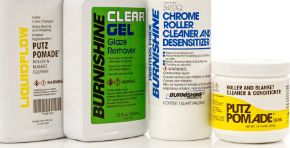
Burnishine Chrome Roller Cleaner https://www.burnishine.com/chrome-roller-cleaner, can rescue you from the drudgery of press cleaning by dramatically reducing clean-up time. If you’re tired of having to scrape dried ink off your rollers, or if you have to use strong, smelly chemicals, Burnishine CRC is the product for you.
Before I explain further, most of you know the importance of keeping your watertrain clean. Your chrome rollers need to maintain their ability to carry water and repel ink. You can end up with picture framing, piling and other issues if ink backs up into your watertrain. https://www.burnishine.com/troubleshooting-guide
Using our CRC (PCN #3462Q) on a regular basis will do wonders for you and your press. Ink build-up should never occur when using CRC as directed. And your chrome will last a lot longer too thanks to the protective barrier it leaves on rollers. Less timing cleaning leaves more time for you to do other things.
I bet you’re asking yourself if the protective “haze” left behind will interfere with or contaminate your fountain solution. The answer is definitely no, it will not.
Here's a couple of great reasons why you should be using Burnishine Chrome Roller Cleaner.
One more thing about the protective haze. It preserves and protects chrome, which can save you money!
Burnishine CRC can be used on just about anything chrome –
Click on this link for more product information, SDS and pricing. https://www.burnishine.com/chrome-roller-cleaner
Give Chrome Roller Cleaner a try…we’re sure you'll love it!
Let’s face it. Cleaning presses can be a real pain in the you-know-what! It’s not fun, and it’s just about the last thing in the world printers want to do. But if you don’t find time to do necessary maintenance and cleaning, you can set yourself up for a wide range of problems such as roller stripping, glazing, ink emulsification, picture framing, etc. When these problems rear their ugly heads, you will consume a lot of time and effort trying to figure out what’s going on. It’s like that old expression…. you can pay me now, or pay me later, but you’ll spend a lot more time and money if you pay later.
This is where Clear Gel Roller Cleaner and Deglazer can become your new best friend and cleaning buddy. Applying a thin bead to rollers will dissolve paper glaze from calcium, and will remove other contaminants so your rollers perform line new! You can even go from black to yellow easily! And it’s safe for daily use. With Clear Gel there is no need to stock separate calcium or glaze removers.
Some products recommend leaving their cleaner on overnight for maximum effectiveness. Not Clear Gel. It works quickly so you can apply it and have time for more important things. Sure, you could leave it on overnight if you want (it won’t swell rollers), but it’s not necessary.
Clear Gel’s convenient squeeze bottle is easy to use too. Liquid deglazers can be harder to handle and may be hazardous. What could be easier than shake, apply and remove with your favorite roller wash?
Clear Gel is safe for all presses and rollers – even acrylic. Years ago, when T-Heads were quite popular, Townsend sent us a great testimonial about the effectiveness of Clear Gel on their acrylic rollers.
We’ve also had testimonials from dealer reps touting how well Clear Gel worked on large presses. It was able to pull old ink out of rollers that were supposedly well maintained.
If you’re not happy with your current roller cleaners or deglazers, or if you’d prefer to buy one product that cleans and deglazes instead of stocking multiple products, give Clear Gel a try! You won’t be disappointed.